Take advantage of chatbots


 Take advantage of chatbots

How to Grow a Blog with Chatbots to Drive More Signups

Chatbots are quickly becoming the next secret weapon for how to grow a blog.

While most people tend to view chatbots as nothing more than customer support tools, it turns out that chatbots and live chat solutions can do so much more when in the hands of the creatively inclined—assuming you’ve used one of the best website builders (like WordPress) that can accommodate these tools.

Imagine being able to personally greet and welcome every member of your audience as soon as they visit your website, or being able to set up meetings and drive people further down your sales funnel completely automatically.

Just take a look at how Acquire uses its own chatbot tool to engage visitors. Their AI chatbot starts the conversation with “👋 Welcome to Acquire! What brings you to our site?” You can talk to different teams at Acquire by simply choosing the option. When you return to the platform, you can continue your chat where you left off. The chatbot also shows resources that might be useful to you.

Be sure to check out all of my top picks for the best AI writing tools and a primer on what AI copywriting is, to see if you should be using AI in your blogging efforts too. My tool suite, RightBlogger, may just be perfect for you.

2. Make your blog’s email newsletter shine

Grow a Blog with an Attractive Email Newsletter

First things first—if you want to grow your blog and email list, you need to give your new subscribers a strong reason to stay. The key to that is crafting a killer email newsletter.

Don’t just treat your email newsletter as another way to notify your audience about your latest blog post, because it can be so much more than that. A well-done email newsletter not only provides your audience with the latest news, updates and content from your blog, but it also gives you the ability to connect with your target audience in a highly personal and engaging manner.

Give people a reason to be excited every time they find an email from you sitting in their inbox.

How to Grow a Blog with Lead Magnets

It’s hard to find a more tried-and-true method of gathering email subscribers to grow a blog, than lead magnets.

In case you’re unfamiliar with the term, a lead magnet is a special piece of content that can only be accessed once someone has given you their email address. Through using lead magnets, you can quickly grow a blog email list with loyal readers and potential customers.

The most effective lead magnets are always ones that solves a real problem experienced by the reader, clearly demonstrates the expertise and value of its creator, and promises an actionable solution. As long as you hit these three things, your lead magnet can be anything from writing an eBook to offering a pre-recorded webinar.

Once you have your lead magnet, it’s just a matter of getting it clearly placed in front of your readership. You can do this by promoting your lead magnet on your own blog through pop-ups, banner ads, text placements and visual callouts in relevant posts, as well as regularly sharing it over on your social media channels.

4 Offer hyper-relevant content upgrades

How to Grow a Blog with Content Upgrades

Anytime you have a popular piece of content that’s generating you a lot of traffic, you have a prime opportunity for a content upgrade.

Simply put, a content upgrade is when you strategically place a lead magnet into the middle of a relevant blog post. While simple, this is an insanely powerful tactic which saw blogger Brian Dean boost his conversion rates by 785% in just one day.

Content upgrades are highly effective as a way to grow a blog because you’re offering your reader something that you know they want.
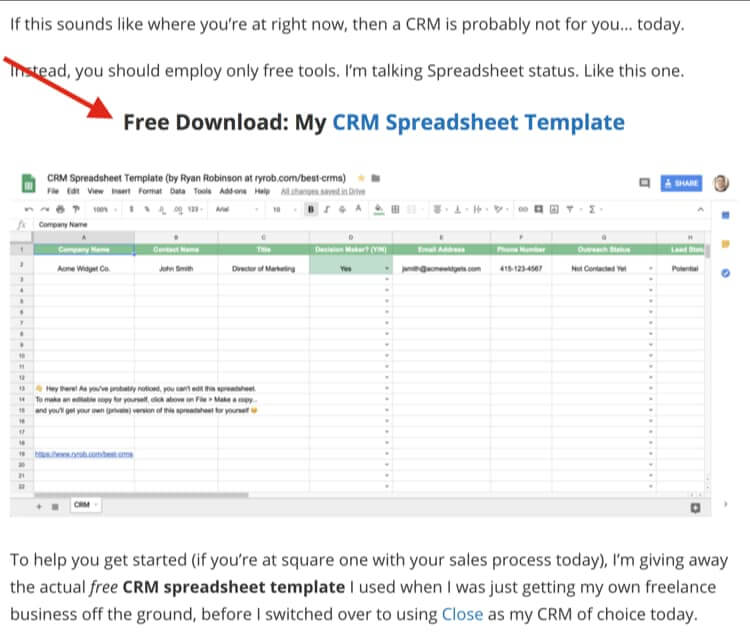
How to Grow a Blog Using Content Upgrades

For example, in my article about the best CRMs to use, I offer my CRM Spreadsheet Template because I already know that if someone’s reading that article, chances are, they’ll be interested in using my spreadsheet template as well.

5. Target exiting readers on your blog
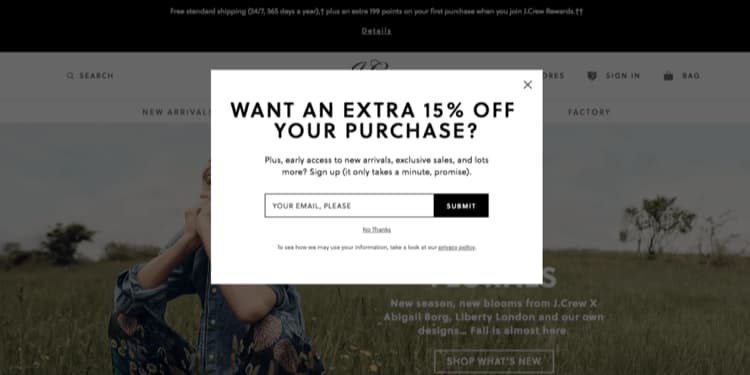
How to Grow a Blog with Exit Intent Popups J Crew Example

Depending on who you talk to, exit-intent pop-ups are either the most annoying thing in the world, or one of the best tactics for generating more conversions to help grow a blog on autopilot.

Where you land on the side of the debate is completely up to you—all I’m here to tell you is that in my experience, I’ve seen multiple blogs and businesses use exit-intent pop-ups to great effect. Though there’s reason to believe that exit-intent popups may soon be discouraged by search engines like Google.

At the end of the day, the vast majority of people who visit your blog will probably do so for a minute or two and take a quick look around before leaving it—probably forever. But just because someone is halfway out the door, that doesn’t mean that you don’t have one last shot to turn them into a loyal fan.

You can see this in action whenever you visit the Foundr blog. Anytime a new visitor attempts to leave a Foundr page, they’ll be presented with a pop-up that presents them with a compelling lead magnet.

Exit-intent pop-ups work by activating whenever a visitor does a very specific action such as anytime they move their cursor to close the browser window, open or close a tab or into the address bar. Whenever a visitor performs any one of those actions the exit-intent pop-up is triggered and the visitor is presented with a carefully crafted pop-up designed to give them one last compelling reason to stick around.

Comments

Popular posts from this blog

How to start a blog that makes you money Anyone can start a blog that makes money. Seriously. Some of you can even generate enough money from your blog to quit your job. Don’t believe me? My blog gets over 2,436,100 visitors annually and generates more than one million dollars in revenue. Screenshot of Neilpatel.com's transaction volume statistics. Above is an example of a 30-day earning period from a previous year. I earned over $381,000 in one month that year! While you’re probably not going to reach that amount right now, I can teach you how to start a blog that makes over $3,000 per month. I started from scratch just like you. But after more than a decade of trial and error, I’ve finally figured out the secret to running a successful blog that makes money. You can avoid these mistakes and generate profits much quicker by following the blueprint outlined in this guide. Your 2-Minute Quick Start Cheat Sheet Looking for a barebones, quick start guide to get started as fast as possible? In this section, we won’t cover everything, only the essential steps. Everything is covered in way more detail later, so jump down if you hit a snag. Before you begin, it’s important to understand the principles behind starting a blog. Pick a big enough niche. Make sure to pick a niche that is bigger than “vegan Caribbean recipes” but smaller than “nutrition.” Don’t stick with one platform. I know I’ve told you that you need to use WordPress as your blogging platform, but it shouldn’t stop there. Why not also use Medium, Tumblr, or even LinkedIn? Control your destiny. Post in multiple places and always link back to your site so you can better control traffic to your site. Blogging is both about “you” and “I.” People want to read stories. They want to be involved in a conversation, and the easiest way to do this is to use the words “you” and “I” within your blog posts. Always ask questions. At the end of every blog post, always ask a question. If you don’t ask a question, people won’t know what to do next. You have to stand out. You have to go above and beyond. Sadly, there is no single answer as every industry is different, but typically, infographics, visuals, and branching off from everyone else in your space will help you stand out. Your content needs to be portable and easy to digest. For example, creating video-based content or audio-based content (podcasts) are simple ways to make your content portable. Content isn’t king unless it’s good. Writing mediocre content isn’t good enough. It won’t do well, and you will just be wasting time. So, don’t write content unless it is really, really, really good. You have to produce quality and quantity. To increase your odds of success, you need to be willing to produce amazing content in quantity. Your blog isn’t always the best place to blog. From industry blogs to large sites like Entrepreneur and Business Insider, consider placing your best content on places with more visibility and higher domain authority, especially in the beginning. Useful content beats viral content. Instead of focusing on creating viral content (when you have less than a 1% chance of producing it), focus on creating useful content. Useful content tends to be evergreen, which means it can generate steady traffic over time. It’s easier to build a personal blog than a corporate one. People connect with people more than they connect with corporate brands. A blog won’t work without a community. Blogging is about creating conversations. But without readers and community, there is no conversation. No man is an island. Make sure you respond to each and every comment. Not just on your blog, but even when people comment on your social profiles, make sure you respond back. People don’t read; they skim, so write your content with that in mind. From leveraging headings to even writing a conclusion at the end of each post, this will help your readers get value out of your content even when they don’t fully read it. It’s all about the headline. 8 out of 10 people will read your headline, but only 2 out of 10 will click through and read the rest. So focus on creating amazing headlines, or else you won’t get tons of traffic. Reveal your cards, all of them. When making a point and having something to back it up, make sure you do it early on in each blog post. It is a great way to hook your readers and get them to read the rest of your content. Consistency will make or break you. Don’t start a blog unless you are willing to be consistent. Not just for a few months or a year, but I am talking years (3 plus). Don’t ever rely on 1 traffic channel. You need to have an omnichannel approach in which you are leveraging all of the feasible channels out there that work for your niche. Don’t forget about Google. You should always write for humans and not search engines. But that doesn’t mean you should ignore Google. Be sure to include keyword research from Ubersuggest and blend them into your content. Understand not all content is meant to last forever. As your blog gets older, your responsibilities will grow. One of them is the willingness to kill some of your content. Not all of your content will be relevant a year or two from now. You can’t set it and forget it. As your content gets outdated, you’ll want to keep it fresh, or people will find that it’s useless and bounce away. People won’t come back to your blog unless you ask them to. No matter how good your content is, people won’t just come back unless you ask them to. The easiest way to do this is through emails and push notifications. Don’t wait too long to monetize. If you go years before trying to monetize, people will assume everything on your blog is free. Have multiple monetization strategies. Not only is it a safer strategy to have multiple monetization methods, but you’ll also make more money. Be willing to pay the price. If you want to succeed, you have to be willing to put in the time and energy. And if you can’t, then you have to be willing to put in money. If you don’t. then you won’t do well, no matter how brilliant of a writer or marketer you are. Now that you know the jist for starting a blog, it’s time to break it down into actionable steps so you can be on your way to making money. Here are the next steps to take: Unleash Ideas Within You Choose a Name For Your New Blog Get Web Hosting From Hostinger Get Familiar With WordPress Install a WordPress Theme Customize Your Blog Brainstorm Blog Topics Write Your First Masterpiece Create an Editorial Calendar Monetize Your Blog Step 1. Unleash Ideas Within You Stop. Don’t get overwhelmed about this whole thing. Just breathe. You got this. You don’t need to reinvent blogging to be successful. You just need to be specific about what you want to talk about. The best way to do that is to get inspired by someone you admire in the same niche or industry. Do they have a blog? If yes, read it. Then begin to let your ideas form. If you have no one specific, find someone you admire. Then let the ideas form. Take your unique experiences and speak about them in your voice. Use your vocabulary and personality, and don’t think about it too much. Let it flow. Your tribe will follow if you stay consistent. When it comes to choosing your blog’s niche, there are two key questions to ask yourself. 1. Do I Enjoy Learning About This Topic?